
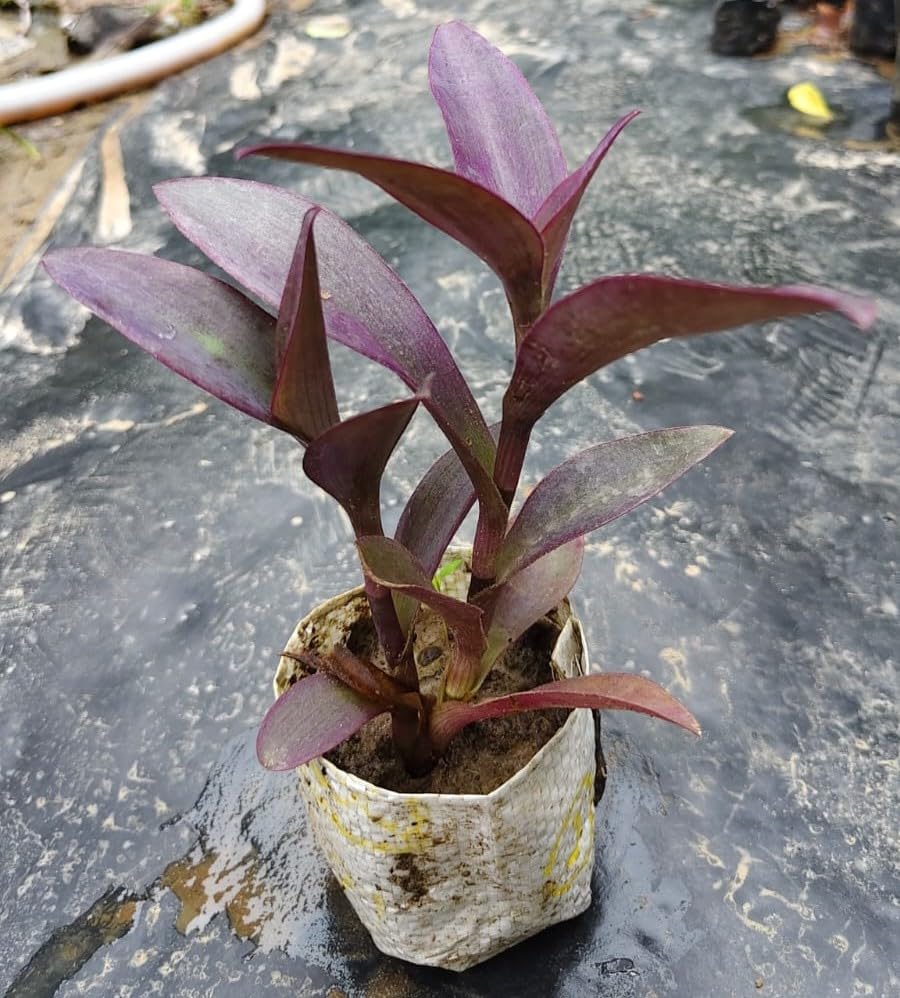
Description
Light: The Secret to Deep Color
-
- The Perfect Spot: Place your plant in a location that receives ample bright, indirect light. A north or east-facing window is often ideal.
- The Pigment Trigger: The rich purple color comes from pigments called anthocyanins, which require light to develop.
- The Danger Zone: Avoid harsh, direct afternoon sun, which can bleach out the rich tones or physically scorch the leaves.
Watering & Soil Architecture
-
- The Touch Test: Water only when the top inch of the soil feels dry to the touch.
- Soil Mix: Use a loose, well-draining potting mix enhanced with perlite, orchid bark, or coco coir to maximize airflow to the roots. Dense soil suffocates roots and causes colors to fade.
- Leaf Protection: For fuzzy-leafed varieties like the Purple Passion, use a long-spouted watering can to pour water directly onto the soil. Getting water trapped on velvet leaves can quickly cause them to rot.
Climate & Feeding
-
- Temperature: Keep them comfortable in a standard indoor range of 60°F to 75°F (15°C to 24°C). Protect them from cold window drafts or air conditioning vents, which trigger stress and leaf drop.
- Humidity: Most purple-leaf plants are tropical natives that thrive in humidity above 50%. Group them near other plants or use a humidifier to keep the air moist.
- Fertilizer: Feed with a balanced, water-soluble fertilizer diluted to half-strength once every 4 weeks during spring and summer. Avoid over-fertilizing, as excess nutrients can actually dilute the foliage color and cause leggy growth.
Maintenance & Grooming
- Pinching for Fullness: Purple plants tend to vine out and look sparse over time. Regularly pinch or clip off the growing tips to force the plant to branch out and grow much bushier.
- Dusting: Gently wipe smooth leaves with a damp cloth, or use a soft makeup brush on fuzzy varieties, so dust doesn’t block the light from reaching the leaf surface
Reviews
There are no reviews yet.